
The Mistake That Starts Every Argument
The fight usually goes the same way. One person says the door is fine because it still opens. The other points out that it groans like a ship every time it moves and asks why that's considered "fine." The tempting mistake here is judging a garage door's remaining life by whether it still works today, instead of by what's actually wearing out inside it. A door and opener can look identical from the driveway and be at completely different points in their lifespan, because they aren't one machine. They're two separate systems bolted together, and they age on different clocks.
Why the Door and the Opener Don't Age at the Same Rate
The Door Itself
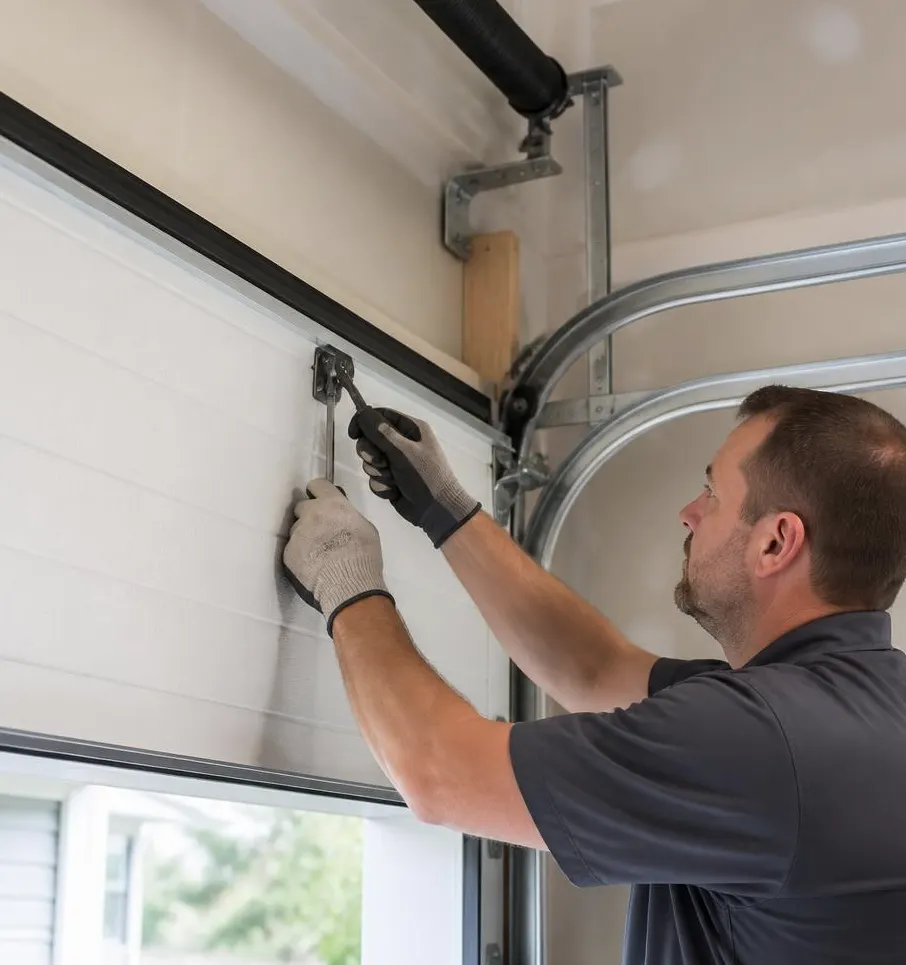
The panels, steel sections, or wood overlay can realistically last twenty to thirty years. Panels don't really wear out from use; they fail from denting, rust, or a storm. What actually fails first is everything that makes the door move: torsion springs, rollers, hinges, and cables. Springs in particular are rated for a number of open-and-close cycles, not years. A typical residential spring is built for somewhere in the range of seven to ten thousand cycles. A household that opens the garage twice a day burns through that far slower than one with teenagers coming and going, a home gym in the garage, or a business using the door dozens of times daily. Two identical doors installed the same week can have completely different remaining lifespans based purely on how often they're used.
The Opener
The motor, gears, and logic board behind the opener generally last ten to fifteen years, and that estimate assumes it isn't doing extra work compensating for a door that's out of balance. Openers are also more sensitive to electrical conditions than people expect. Power surges, voltage dips during outages, and heat inside an attached garage can shorten a circuit board's life even if the motor itself is mechanically sound. This is why a ten-year-old opener can die suddenly while the door it operates still has another decade of usable panel life left.
What Shortens the Life of Either One
- Ignoring cycle wear on springs. People track age in years, but springs don't care about the calendar. High daily use wears them out faster regardless of how new the door looks.
- Salt air. Homes closer to the coast deal with a slow, steady corrosion process on springs, tracks, and hardware that inland homes don't see nearly as much. It's not dramatic, just constant.
- Dust and dry-season debris. San Diego's dry stretches, plus the grit and smoke that can drift in during wildfire season, work their way into rollers and tracks and act like sandpaper every time the door moves.
- Skipping lubrication. Dry hinges and rollers create friction, and friction is what turns a quiet door into a noisy one and a noisy one into a broken one.
- DIY adjustments that throw off balance. An unbalanced door forces the opener's motor to do extra work on every cycle, which quietly shortens its life even though nothing looks wrong from the outside.
- Winter rain intrusion. Worn weatherstripping lets water track under the bottom panel and rust the bottom brackets and hardware over a few seasons of wet winters.
What Actually Extends It
- A yearly tune-up timed before the rainy season. Lubricating hinges, rollers, and the opener's chain or screw drive before winter rain and after a dry summer keeps friction and corrosion from compounding.
- Replacing springs proactively. Waiting for a spring to snap means dealing with it on the worst possible day. Replacing it based on estimated cycle count avoids the surprise entirely.
- Keeping the opener's force and travel settings correct. A properly calibrated opener doesn't strain against a door that's slightly out of balance.
- Checking battery backup systems. If outages are a factor at your home, a backup battery that's actually maintained saves wear on the motor during manual overrides.
- Fresh weatherstripping. It blocks both dust and water, protecting the parts underneath far more than people expect from something so simple.
- Having earthquake retrofit bracing checked. Retrofit hardware is good for structural safety, but if it's installed in a way that binds the door's movement, it can add strain to both the springs and the opener without anyone noticing until something fails.
When to Call San Diego Garage Door Service
If you're not sure whether the groaning, the slow response, or the occasional stick is a spring problem, an opener problem, or just dust in the tracks, that's exactly what a maintenance visit sorts out. Our Garage Door Maintenance service includes a balance check, lubrication, and hardware inspection so you know which system is actually aging and which one still has years left. If the springs are near the end of their cycle life, our Spring Replacement service gets them swapped out on a planned schedule instead of a Saturday morning emergency. Either way, you'll have a straight answer instead of two competing guesses.
If your garage door or opener has been the subject of debate at your house, let's settle it with an actual inspection instead of another argument. Reach out to San Diego Garage Door Service and we'll tell you exactly what's wearing out, what's fine, and what to plan for next.