
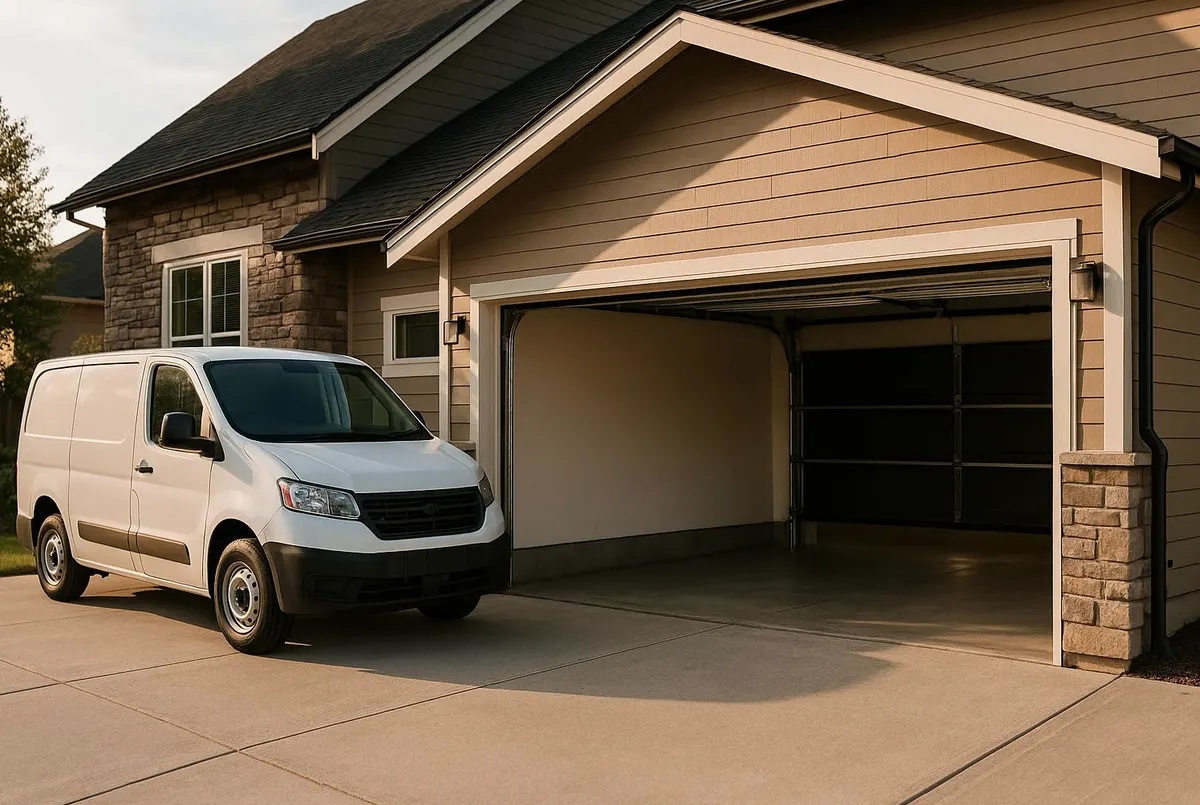
What a Service Call Usually Looks Like
Most calls start the same way: a homeowner in a neighborhood like Hillcrest or North Park says the door 'sounds different' than it used to, but can't quite describe it. By the time a technician pulls into the driveway, they're already listening for one of four patterns—grinding, squealing, popping, or rattling—because each one points to a different part of the system, and each has its own order of things to check before touching a wrench.
Grinding: Metal-on-Metal That Shouldn't Be There
Grinding usually sounds like a low, rough scrape that happens as the door moves, often worse at the start or end of the cycle. It's rarely the motor itself—that's what homeowners assume, but it's usually further down the chain.
- Rollers first: A technician checks the rollers for flat spots or cracked nylon housings. Years of dry-season dust working into the track accelerates this, especially on doors that haven't been lubricated recently.
- Track alignment next: Bent or misaligned track will cause rollers to grind against metal instead of rolling smoothly. This gets checked with a level and a visual sight-down of the rail.
- Bearings last: If the noise is isolated to the opener's drive gear or the torsion bar bearing plates, that's a motor-adjacent fix, not a door fix.
The fix is usually roller replacement (steel or nylon, in the $80–$200 range for parts and labor depending on how many need swapping) or track realignment, which takes less time but requires precise adjustment to avoid throwing the door off balance again.
Squealing: A Lubrication Problem Until Proven Otherwise
Squealing is high-pitched and usually constant through the whole open-or-close cycle. It's the noise most homeowners can fix themselves, but it's also the one that gets ignored the longest.
- Lubrication check first: Dry rollers, hinges, and springs are the most common cause, especially after a dry stretch with dust in the air. A silicone-based garage door lubricant (not WD-40, which attracts grit) resolves most of these on the spot.
- Hinge wear next: If lubrication doesn't quiet it down, the technician checks hinge pins for wear—these loosen over thousands of cycles and start squealing under tension.
- Spring tension last: A spring that's slightly out of adjustment can squeal under load. This gets checked but isn't adjusted on the spot—spring work always gets scheduled separately because of the tension involved.
Most squealing fixes are quick: lubrication and a hinge swap can often happen in the same visit, usually under $150 total.
Popping: Something Is Catching, Not Just Rubbing
Popping is a sharper, more irregular sound—often a single pop at a specific point in the door's travel, not a continuous noise. This one gets treated more carefully because it can signal a spring or cable issue.
- Spring inspection first: A fraying torsion spring or one with uneven coil gaps can pop as it flexes. This is checked visually from a safe distance, never by hand.
- Cable and drum check next: A cable slightly off its drum can pop as it re-seats with each cycle. Coastal humidity and salt air accelerate cable corrosion, so this gets extra attention on homes near the water.
- Panel and hardware last: On sectional doors, a loose hinge screw or a panel that's flexing against its neighbor can pop with no safety risk at all—just annoying.
If it's hardware, it's a five-minute tightening job. If it's a spring or cable, that becomes a spring replacement, which is intentionally not a DIY repair given the tension involved.
Rattling: Usually Hardware, Sometimes the House Itself
Rattling is a loose, shaking sound, often most noticeable right as the door starts moving. It's the least urgent noise but the most likely to get worse over time if ignored.
- Fasteners first: Every bracket, hinge bolt, and track bolt gets checked and torqued. Vibration from daily use loosens these gradually, and it's the single most common rattling cause.
- Opener mounting next: A chain-drive opener with a loose mounting bracket will transmit rattling down through the rail with every cycle.
- Seismic retrofit hardware last: On older homes with retrofitted bracing near the garage, loose anchor bolts can rattle in sync with the door's movement—worth checking if the rattling seems to come from the wall, not the door.
This is usually the cheapest fix on the list: a tightening pass with a torque wrench, sometimes paired with new isolation washers on the opener bracket to dampen vibration going forward.
When It's Time to Call San Diego Garage Door Service
If lubrication doesn't quiet a squeal, if you see a visible gap or fray in a spring, or if a rattle keeps returning after you've tightened everything you can reach, it's time for a proper diagnosis. Our Garage Door Repair visits start with the same symptom-first process outlined above, and if the issue turns out to be a spring, we handle Spring Replacement with the right tools and tensioning equipment—not something to attempt with a ladder and a wrench.
If your door is making noise and you're not sure which category it falls into, call San Diego Garage Door Service. We serve San Diego, La Jolla, Chula Vista, El Cajon, National City, Coronado, Encinitas, and Poway, and we'll tell you straight whether it's a quick fix or something that needs scheduling.