
The Mistake: Judging Balance by Watching the Opener Work
Most people test their garage door the same way: they hit the wall button, watch the door glide up and down, and if it looks fine, they move on. It's a tempting shortcut because the door does look fine. But that test only tells you the opener is strong enough to muscle the door into position—not that the door itself is balanced. A quarter-horsepower motor can hide a surprising amount of spring imbalance for months, right up until it can't.
Balance is about the springs, not the motor. A properly balanced door should feel almost weightless when it's disconnected from the opener and moved by hand. If it doesn't, the opener is quietly doing extra work every single time it runs, and that adds up fast—especially with San Diego's wide swing between dry, dusty inland summers and damp coastal winters, both of which stress springs and tracks in different ways.
Why an Unbalanced Door Is Hard on the Opener
An opener is designed to assist a balanced door, not carry an unbalanced one. When springs weaken or lose tension, the opener's drive gear, belt or chain, and trolley all take on extra load with every cycle. Over time this shows up as:
- A motor that strains, hums longer, or seems to "pause" mid-cycle
- Faster wear on the drive belt or chain
- The opener's force settings needing constant readjustment
- Premature failure of the circuit board or capacitor from repeated overload
- The safety reversal system triggering on doors that aren't actually obstructed
In short, you can replace an opener and still have the same problem reappear in a year or two if the real issue was an unbalanced door all along.
Tools You'll Need
- A step ladder (tall enough to reach the manual release cord)
- Work gloves
- A flashlight, if your garage lighting is dim
- Your phone or a notepad to jot down what you observe
How to Test Garage Door Balance, Step by Step
- Close the door completely. Start with the door fully down so you're testing from a known position.
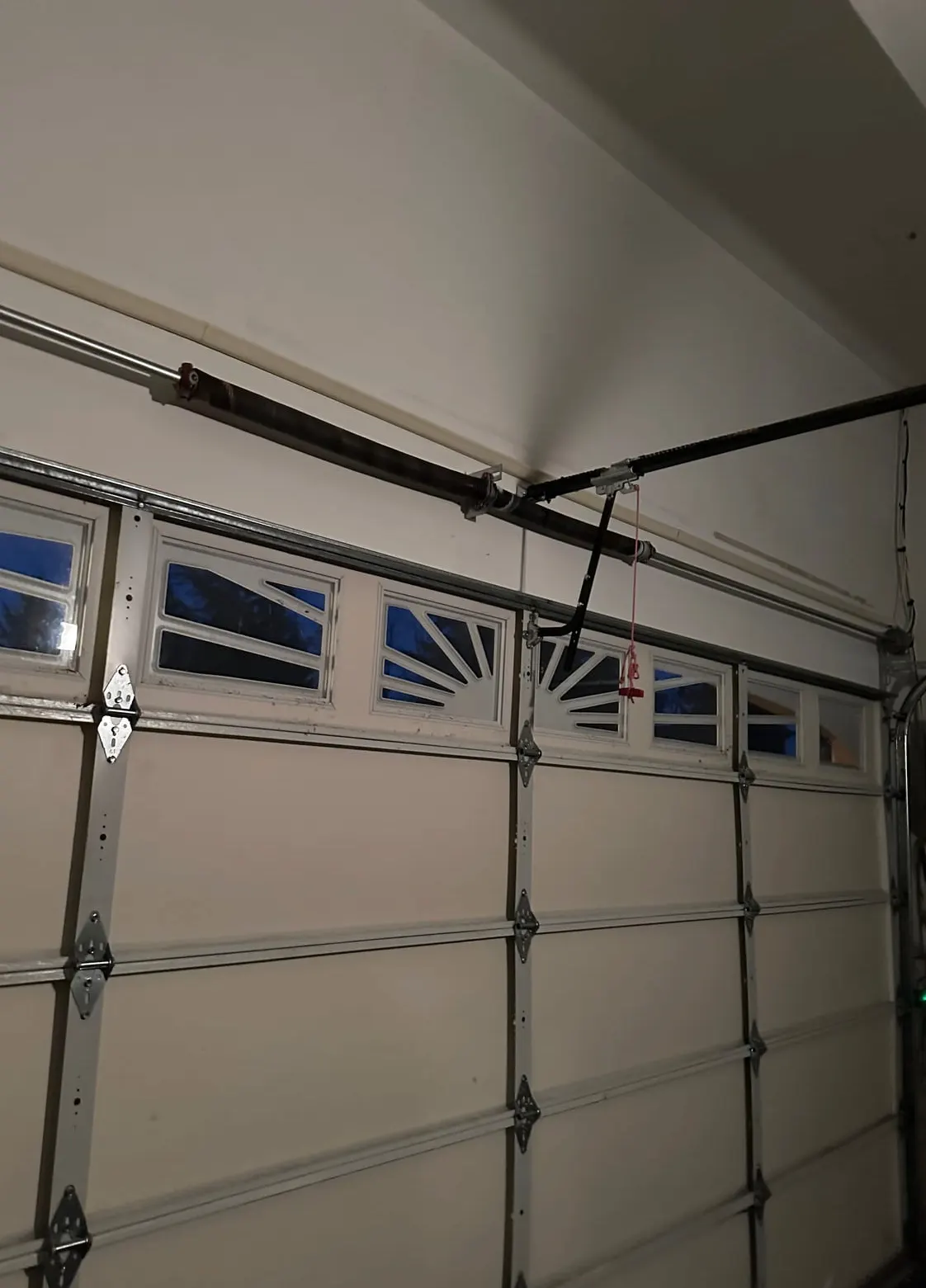
- Disconnect the opener. Pull the red manual release cord (usually hanging from the trolley on the ceiling track) to disengage the door from the opener. You should hear or feel a click as it separates.
- Lift the door by hand. Using the handle or bottom panel, raise the door slowly to about waist height.
- Let go and watch. A balanced door will stay roughly in place, drifting down or up only slightly. An unbalanced door will either slam shut on its own or shoot upward—both are signs the springs are no longer matched to the door's weight.
- Repeat at two more points. Test again with the door about a third of the way open and again near the top. Imbalance sometimes only shows up in certain positions, particularly with older torsion spring setups.
- Listen and feel for resistance. Note any grinding, binding, or spots where the door feels noticeably heavier. This can point to track misalignment or roller wear working alongside the spring issue.
- Reconnect the opener carefully. Pull the release cord again (or follow your model's reconnect procedure) and run the door through a normal open-close cycle to confirm it re-engages properly before you rely on it again.
What a Homeowner Can Safely Do
Everything above—the hand-lift test itself—is safe for a homeowner to perform. It takes five minutes, costs nothing, and tells you more about your door's true condition than weeks of just watching the opener run. If the door holds its position at all three test points, your balance is likely fine and any noise or slowness you're hearing is probably coming from somewhere else, like worn rollers or opener hardware.
What Needs a Technician
Adjusting spring tension is not a DIY step, and this is where the line matters. Torsion springs are wound under extremely high tension and are mounted above the door on a bar that can cause serious injury if it's handled without the right winding bars and clamps. If your test shows the door sliding, dropping, or shooting upward, the fix is a tension adjustment or spring replacement—jobs that require specialized tools and experience, not a set of pliers from the garage shelf.
A Local Wrinkle Worth Knowing
Springs don't fail on a fixed schedule; they fail based on cycles and conditions. Coastal homes dealing with salt air often see faster spring corrosion, which changes tension gradually and quietly. Inland homes facing hot, dry summers and dusty Santa Ana wind periods can see grit build up in tracks that makes a door feel "heavier" even when the springs themselves are fine—which is exactly why the step-by-step test above, done at multiple points, is more reliable than a quick glance.
When to Call San Diego Garage Door Service
If your hand-lift test shows the door dropping fast, floating upward, or binding at certain points, it's time to call in a technician rather than keep running it on the opener. San Diego Garage Door Service handles spring replacement and tension adjustments with the proper clamps and winding bars, and we'll also check your rollers, cables, and track alignment at the same time since those often wear together. If the balance test passes but something still sounds off, our garage door maintenance visit covers a full inspection so small issues get caught before they turn into an opener replacement you didn't need to buy.
If your garage door isn't behaving the way it should, give San Diego Garage Door Service a call. We serve San Diego, La Jolla, Chula Vista, El Cajon, National City, Coronado, Encinitas, and Poway, and we're ready to get your door back in balance.