
The Question You're Actually Arguing About
Here's what ignoring this through another San Diego winter actually costs: a garage door opener with safety sensors so caked in dry-season dust they stop reversing properly, a set of springs that seized up from sitting mostly idle and now need full replacement instead of a simple tune-up, or water finding its way under a door whose weatherstripping cracked two summers ago and nobody noticed because nobody's parked a car in there since the treadmill went in. None of that is cheap, and all of it is avoidable. So before this turns into another round of 'I told you so,' here's what actually happens to a garage door when the space behind it stops being a garage.
It's Not Really an Either/Or Decision
One of you probably wants to rip the door out and wall the opening in like a real room. The other wants to keep it as-is in case you ever sell, or because closing in a garage can affect how the house shows to buyers who want parking and storage. Both positions are reasonable. The good news is the door itself doesn't force the decision — what matters is what you do with it once the space behind it changes jobs.
What Changes When a Garage Becomes a Gym, Office, or Workshop
A standard garage door isn't built to be a wall for a room people spend hours in. A few things shift the moment you start using that space daily instead of just driving through it:
- Temperature swings get noticed. An uninsulated steel door turns a hot inland afternoon into an oven and a damp coastal winter morning into a cold box. If the room is now a gym or office, that difference is no longer background noise — it's the reason the AC runs constantly or the space just doesn't get used.
- Sealing matters more. Dry-season dust and wildfire smoke find their way through old or cracked weatherstripping. So does rain once winter arrives. A garage holding tools and a car tolerates some of that. A home gym with electronics or a workshop with dust-sensitive equipment doesn't.
- Safety sensors start mattering for people, not just cars. If someone's working out, working, or working with tools right next to a door that still opens and closes, the auto-reverse sensors need to actually work, every time.
- Salt air doesn't care what room this used to be. If you're anywhere near the coast, hardware on an infrequently used door can quietly rust while nobody's looking.
Three Ways Homeowners Actually Handle This
You generally have three real options, and each one has a trade-off worth saying out loud:
- Keep the door fully functional. You still park there occasionally, store bikes, or just want the flexibility and resale value of a real garage. This means the door still needs normal maintenance — lubrication, balance checks, spring inspection — even if it only opens twice a week now instead of ten times a day.
- Weatherstrip and insulate it, use it rarely. The door stays but becomes more of a sealed wall than a daily-use opening. This fixes a lot of the temperature and dust problems cheaply, but the door still has springs under tension and an opener with a motor that can seize if it sits too long without being exercised.
- Remove it and frame in a wall. This gives the best insulation and sealing, but it's a bigger project, affects resale flexibility, and in older homes may intersect with structural considerations around that opening, since garage walls are often part of a house's earthquake bracing. That's worth a conversation with a contractor, not just a garage door technician.
The Part People Forget: Less Use Isn't the Same as No Maintenance
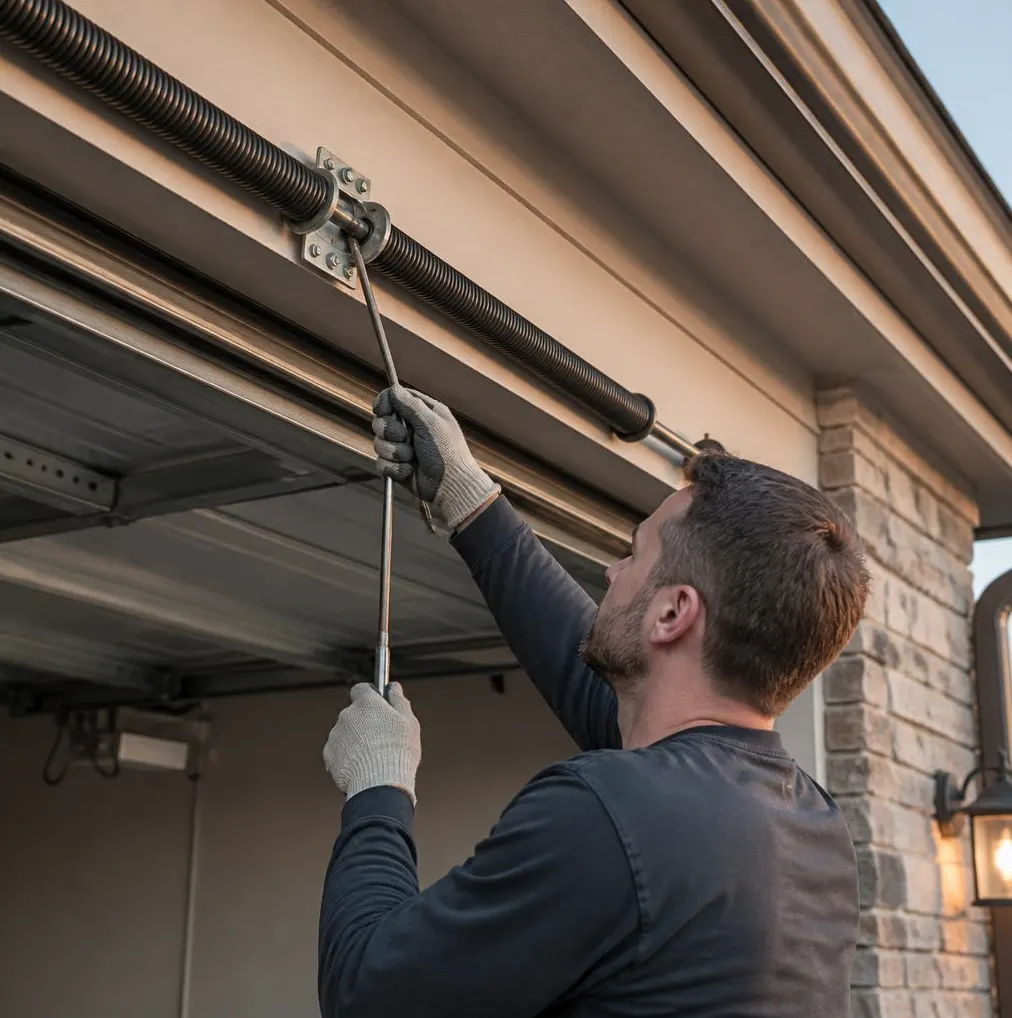
Whichever option wins the argument, a door that's used less often isn't a door that can be ignored. Springs lose tension and develop fatigue whether a door opens ten times a day or ten times a year. Rollers and hinges that sit still in salt air or through a dry season of dust can seize or corrode faster than ones in regular use, not slower. An opener that hasn't run in weeks is more likely to have a dead remote battery or a sensor that's drifted out of alignment than one running daily. 'We barely use it now' is exactly the situation where small problems go unnoticed until something fails all at once.
When to Call San Diego Garage Door Service
If the plan is to keep the door and just use it less, that's a good time for a garage door maintenance visit — checking spring tension, resealing weatherstripping, and making sure the opener's safety sensors still work before the space becomes a daily-use room. If the opener is struggling, cycling slowly, or the sensors aren't reliably stopping and reversing, that's a job for garage door opener repair & installation rather than a guess-and-hope fix, especially once people are regularly standing or working near it.
Whichever side of the argument wins, San Diego Garage Door Service can look at the actual door and tell you what it needs before the conversion is finished, not after something breaks. Call us to get it checked out before the new gym equipment or desk shows up.